
Inicio – Blog
By Ismael Perdomo
Medical Doctor (MD), Pediatric Specialist, Epidemiologist
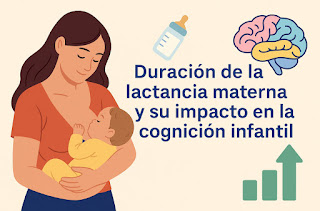
The duration of breastfeeding has been associated in multiple studies with superior cognitive development in children, even after adjusting for key variables such as socioeconomic status and maternal intelligence. A recent study from the Millennium Cohort Study (United Kingdom) found advantages in verbal and spatial performance scores between ages 7 and 14, with average increases ranging from 0.08 to 0.26 standard deviations compared to non-breastfed children. Although this effect may appear modest at the individual level, it carries significant relevance at the population level.
Updated Scientific Evidence
A review published in ScienceDirect in 2022 confirmed that, after adjusting for sociodemographic and cognitive factors, breastfeeding remains consistently associated with better cognitive performance during childhood. Similarly, Horta et al. (2015) reported in their meta-analysis that adults who had been breastfed during infancy scored, on average, 3.4 points higher in IQ tests.
A study based on data from the ABCD (Adolescent Brain Cognitive Development) project, published in Nature Pediatric Research in 2024, found that children aged 9 and 10 years who were breastfed for longer periods demonstrated greater cortical gray matter volume, larger brain surface area, and improved overall cognitive performance. These structural changes were more pronounced when breastfeeding extended beyond 12 months.
Researchers in Spain reported that children breastfed between 1 and 8 months demonstrated increases of 3 to 4 IQ points at ages 4–5 years, even after controlling for maternal intelligence and educational level. In the United Kingdom, the study referenced by Medscape demonstrated that the cognitive benefits of breastfeeding persisted up to 14 years of age, particularly in verbal abilities.
In premature and very low birth weight infants, the benefits of breast milk are even more significant. A review published in Frontiers in Public Health in 2024 highlighted that even small proportions of breast milk intake reduced the risk of cognitive disability, motor difficulties, and language impairments.
How Does Science Explain This Effect?
Human milk contains DHA and ARA, essential fatty acids that play a fundamental role in myelination and synaptic brain development during the first two years of life.
Eye contact, physical closeness, and shared interaction during breastfeeding stimulate brain regions associated with empathy, language development, and emotional self-regulation.
The immunological and prebiotic components of breast milk help shape the infant microbiota, which in turn influences the gut-brain axis and neurobehavioral development.
Breast milk contains neurotrophic factors and bioactive proteins that support neuronal maturation and brain development.
How Significant Is the Effect?
Although the increase in IQ or cognitive performance may seem relatively small — approximately 3 to 5 points — this effect is comparable to differences associated with parental educational level or school environment. When applied across millions of children within a population, the cumulative impact on academic achievement, future productivity, and mental health becomes highly significant.
Methodological Limitations
It is important to note that most of these studies are observational. Although they rigorously adjust for factors such as maternal intelligence, family environment, and educational level, they cannot establish a completely causal relationship. However, randomized clinical trials such as the PROBIT Trial (Belarus) provide stronger evidence by demonstrating cognitive benefits at 6 years of age among children whose mothers received intensive breastfeeding promotion interventions.
Furthermore, recent neuroimaging studies support the biological plausibility of these benefits.
Practical Recommendations
Organizations such as the World Health Organization (WHO) and the American Academy of Pediatrics (AAP) recommend:
Exclusive breastfeeding during the first 6 months of life.
Continued breastfeeding alongside complementary foods until at least 2 years of age, or as long as mother and child desire.
From a public health and community perspective, it is essential to:
Strengthen breastfeeding support programs.
Protect breastfeeding in the workplace through maternity leave policies and appropriate lactation spaces.
Provide breastfeeding guidance and support beginning during pregnancy.
Conclusion
Breastfeeding not only protects against infections, allergies, and childhood obesity. It also nourishes the brain, enhances cognitive abilities, and supports optimal neurological development. Promoting breastfeeding is both an intelligent and humane investment in the future of our societies.
As pediatricians, healthcare professionals, and parents, we have the responsibility to create a true culture of breastfeeding support. Its impact goes far beyond nutrition: it is neurodevelopment, emotional bonding, and lifelong health.
Selected References
Horta BL, Loret de Mola C, Victora CG. Breastfeeding and Intelligence: A Systematic Review and Meta-analysis. Acta Paediatr. 2015;104(467):14–19.
Rajagopalan V, Hsu E, Luo S. Breastfeeding Duration and Brain-Body Development in 9–10-Year-Olds. Pediatr Res. 2024;95(1):28–35.
Bernard JY et al. Breastfeeding, Cognitive and Non-Cognitive Development at 5–6 Years. Paediatr Perinat Epidemiol. 2021.
Kramer MS et al. Promotion of Breastfeeding Intervention Trial (PROBIT). JAMA. 2008;300(9):1037–1045.
Frontiers in Public Health. Breastfeeding and Neurodevelopment in Preterm Infants: A Meta-analysis. 2024.
Victora CG, Bahl R, Barros AJD, et al. Breastfeeding in the 21st Century: Epidemiology, Mechanisms, and Lifelong Effect. Lancet. 2016;387(10017):475–490.

© 2026 With Ties of Love Inc. | 501(c)(3) Public Charity | EIN 99-3711421 | FL Doc. No. N24000007712 | CH79198.- Diseño Web: www.creasotol.com