
Childhood obesity does not begin when a child starts school or when excess weight becomes visible. Its biological and behavioral trajectory often starts before birth and consolidates during the first 1000 days of life, from preconception to age two. This concept is highly relevant in preventive pediatrics because it shifts the focus from late correction […]

Modern well-child care should not be limited to tracking weight, length, and vaccines; it must also anticipate the everyday behaviors that shape future metabolic risk. In early infancy, practices such as persistent nighttime feeding without clear need, pressure to finish the bottle, screen use during feeding, and poor sleep routines can become early obesogenic factors. […]

One of the most important debates in current pediatric nutrition is no longer only how much children eat, but how much of their diet comes from ultraprocessed foods. These industrial formulations often concentrate free sugars, sodium, low-quality fats, additives, and high energy density while displacing fresh or minimally processed foods. In clinical practice, frequent intake […]

When discussing childhood obesity, we often think first about weight, body image, or future diabetes risk. Yet one of its most important and underestimated comorbidities is metabolic dysfunction-associated steatotic liver disease, now termed MASLD. This condition reflects fatty liver in the setting of metabolic abnormalities and has become a clinical expression of the systemic damage […]
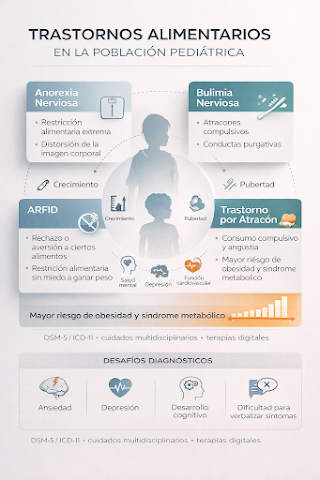
A Clinical Update That Public Health Cannot Ignore When discussing childhood nutrition, public debate often focuses on obesity while overlooking another critical part of the problem: pediatric eating disorders. The review published in Nutrients in May 2025 reminds us that anorexia nervosa, bulimia nervosa, binge-eating disorder, and ARFID represent complex diagnostic and therapeutic challenges due […]

