
Inicio – Blog
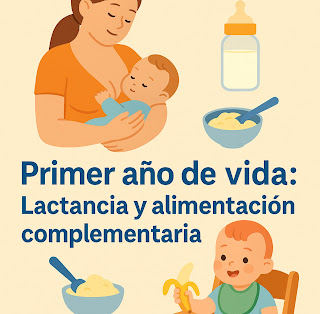
Nutrition During the First Year of Life: Scientific and Practical Recommendations for Parents and Medical Students
By Dr. Ismael Perdomo – Pediatrician | Epidemiologist
Introduction
The first year of life is a period of accelerated and comprehensive development in which the foundations of physical growth, neurological maturation, immune function, intestinal microbiota, eating habits, emotional bonding, and future metabolic programming are established.
During these first 12 months, the infant’s brain undergoes rapid synaptogenesis, myelination, and expansion of functional neural networks, all of which are strongly influenced by the type of nutrition received. Therefore, ensuring appropriate nutrition not only prevents disease but also enhances neurodevelopment, future mental health, and immune resilience.
0 to 6 Months: Exclusive Breastfeeding (EBF)
Universal Recommendation
Exclusive breastfeeding is the ideal and sufficient source of nutrition until 6 months of age. This means that no water, juices, formula, or solid or liquid foods should be offered unless medically indicated.
Scientific Support
American Academy of Pediatrics (AAP) (2022)
World Health Organization (WHO) (2023)
Cochrane Database (Kramer & Kakuma, 2012)
JAMA Pediatrics (2024)
Proven Benefits
Reduces respiratory infections, gastrointestinal illnesses, and otitis media.
Helps prevent obesity, type 1 and type 2 diabetes, and allergic diseases.
Promotes neurological development and mother-child bonding.
Positively modulates intestinal microbiota and epigenetic programming.
Supplementation
Vitamin D: 400 IU/day from the first days of life in exclusively breastfed infants.
Iron: Supplementation beginning at 4 months in high-risk infants (premature babies, low birth weight, or rapid growth).
6 to 12 Months: Complementary Feeding + Breastfeeding
Starting at 6 completed months, human milk alone no longer fully meets the infant’s nutritional requirements, especially regarding iron, zinc, and energy. This is the ideal time to begin complementary feeding while continuing breastfeeding.
Principles of Complementary Feeding
Progressive: Start with 1–2 teaspoons and gradually increase according to tolerance.
Varied: Include fruits, vegetables, cereals, legumes, meats, and eggs.
Timely: Begin at 6 months unless clinical exceptions exist.
Texture-appropriate: Start with purées, then progress to mashed foods and soft pieces.
Safe: No salt, sugar, honey, hard foods, or round choking hazards.
Guided: Allow the infant to explore foods with their hands (supervised baby-led weaning).
Recommended Feeding Stages
This section has been validated according to the latest clinical guidelines from the AAP, WHO, EFSA, and systematic reviews published in JAMA Pediatrics, Pediatrics, and the Cochrane Database. It reflects current pediatric recommendations regarding complementary feeding, neurodigestive maturity, food allergy risk, micronutrient requirements (especially iron and zinc), and early epigenetic programming.
6 Months
Continue breastfeeding on demand.
Introduce gluten-free cereals (rice, corn) in porridge form.
Soft fruits such as papaya, banana, pear, apple, and melon as purées.
Cooked vegetables in purée form: carrot, squash, spinach.
Do not add sugar or salt.
1–2 meals per day plus breast milk.
7–8 Months
Introduce lean meats (chicken, liver, beef), cooked and mashed.
Begin offering cooked egg yolk (10 minutes).
Legumes (lentils, peas, chickpeas) blended or mashed.
Introduce cereals containing gluten (wheat, oats).
2 meals + 1 snack + breastfeeding.
9–11 Months
Increase food consistency with chopped foods and soft pieces.
Bread, soft crackers, fresh cheese pieces, cooked fruits.
Introduction of cooked egg white.
Unsweetened plain yogurt and pasteurized cheese.
3 meals + 2 snacks + breast milk.
12 Months
Full integration into family meals.
The child may consume all healthy food groups.
Solid textures, well-cooked foods, and constant supervision.
Continue breastfeeding until 2 years of age or beyond.
Allergenic Foods: Delay or Introduce?
Recent evidence indicates that:
There is no need to delay the introduction of allergenic foods such as peanuts, eggs, or fish.
In high-risk children (severe eczema or strong family history of allergies), introduction between 4–6 months may be considered under medical supervision.
Epigenetics, Microbiota, and Future Health
Nutritional exposure during the first year modulates the expression of genes related to inflammation, adipogenesis, and immune tolerance.
Exclusive breastfeeding and a diverse diet rich in plant fibers and free from ultra-processed foods promote a healthy microbiota.
This early metabolic programming influences the future risk of chronic diseases in adulthood.
Common Mistakes That Should Be Avoided
❌ Starting solid foods before 4–5 months (except in selected high-risk groups).
❌ Using baby bottles for purées or solid foods.
❌ Offering juices, salt, sugar, honey, or ultra-processed products.
❌ Delaying allergenic foods without clinical justification.
❌ Failing to provide iron supplementation in at-risk infants.
Conclusion
The first year of life represents a critical window for establishing lifelong health. The combination of exclusive breastfeeding for 6 months, followed by appropriate, safe, diverse, and emotionally supportive complementary feeding, constitutes a preventive intervention with significant clinical, immunological, neurological, and social benefits.
Scientific References
Meek JY, Noble L. Breastfeeding and the Use of Human Milk. Pediatrics. 2022;150(1).
WHO. Infant and Young Child Feeding. Fact Sheet. 2023.
Luby JL, Herzberg MP, Hoyniak C, et al. Basic Environmental Supports for Positive Brain and Cognitive Development. JAMA Pediatrics. 2024;178(5):465–472.
Soriano VX, et al. Complementary and Allergenic Food Introduction in Infants: Umbrella Review. Pediatrics. 2023;151(2).
Verga MC, Scotese I, Bergamini M, et al. Timing of Complementary Feeding, Growth and Non-Communicable Diseases. Nutrients. 2022;14(3):702.

© 2026 With Ties of Love Inc. | 501(c)(3) Public Charity | EIN 99-3711421 | FL Doc. No. N24000007712 | CH79198.- Diseño Web: www.creasotol.com